Singing Tips for Moms: Find Your Voice and Confidence
Most of the moms I coach don't have a singing problem. They have a permission problem.
The voice is there. Rustier than it was, sure, and quieter, and it tires fast. But the thing actually stopping them from singing isn't the vocal cords. It's the feeling that singing is something you do when the dishes are done and the kids are asleep and you've somehow earned it. Which, if you're a mom, means never.
So these tips are half technique, half permission slip.
1. Stop waiting for privacy
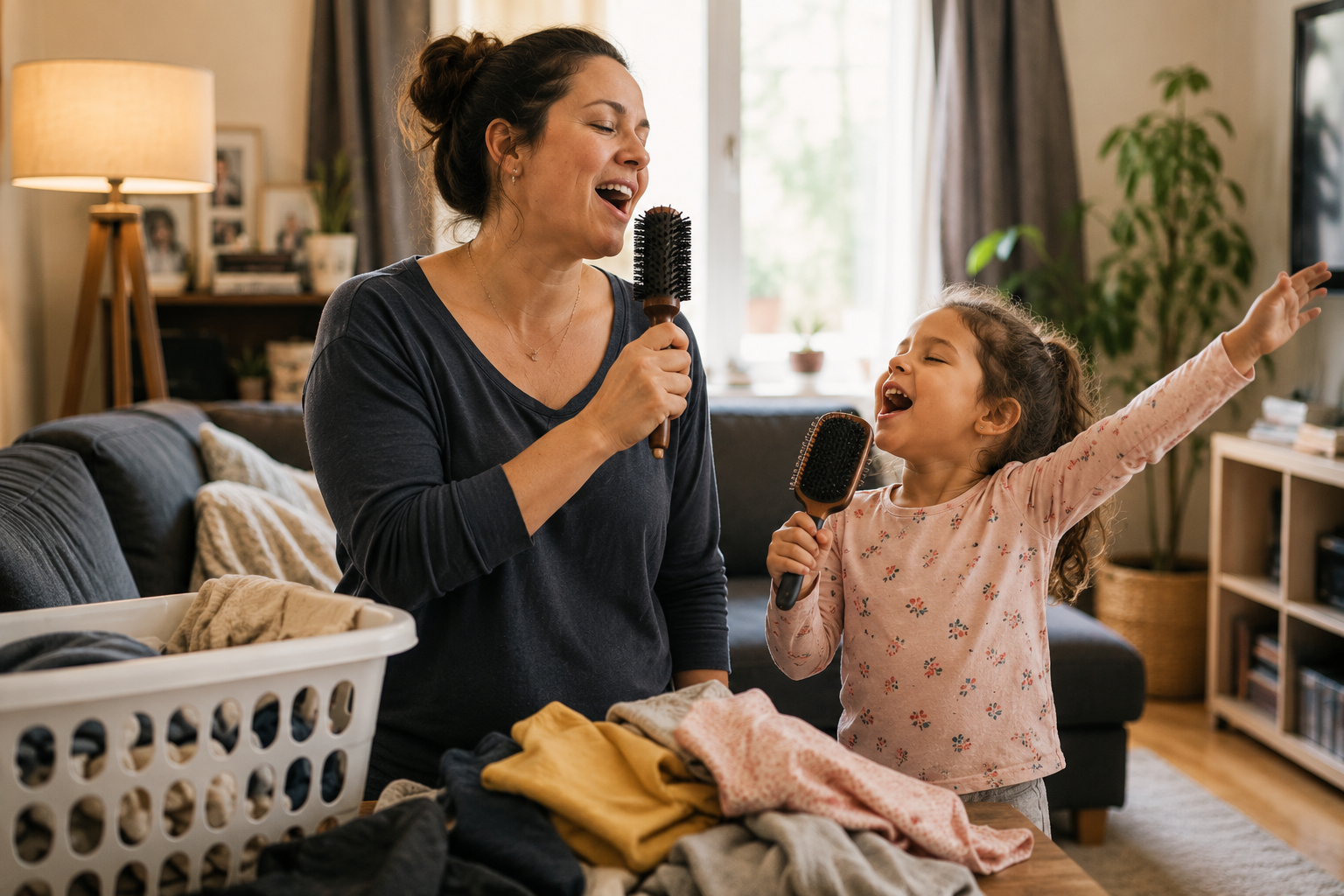
You will not get a quiet hour. Take the ninety seconds instead. Hum in the shower, where the steam actually helps your voice. Do a gentle siren in the car at a red light. Sing while you fold laundry. A voice rebuilds on short, frequent reps, and ordinary life is full of them. Five minutes most days beats an hour once a week, and it isn't close.
2. Sing for the audience that already loves you
Your kids do not care if you crack a note. Sing with them. It's the lowest-pressure stage on earth, it counts as real practice, and it quietly rewires the belief that your voice has to be "ready" before anyone hears it. If singing stopped when the kids arrived, I wrote a practical plan for coming back to singing after kids.
3. Start where your speaking voice lives
Don't open with the big song from years ago. Say a sentence out loud and notice the pitch you land on. That easy middle zone is home base. Hum there, slide around a little, sing a few phrases of something simple without pushing volume. Confidence grows fastest in the range where nothing hurts.
4. Breathe lower than feels natural
Pregnancy and everything after it change your breathing and your core, and nobody hands you a memo about what that does to singing. Put a hand on your belly and breathe so the hand moves, not your shoulders. That low breath is what steadies a shaky note. If your sound feels wobbly or thin, spend a week on breathing exercises for singing before you judge your voice at all.
5. Warm up small, every time
Two minutes is enough: humming, then lip trills, then one easy slide up and down. The full beginner routine is in vocal warmups for beginners if you want it spelled out. A warmed-up voice behaves better, and a voice that behaves builds confidence a lot faster than one that keeps surprising you.
6. Drop the key, keep the song
If the song sits too high, sing it lower. You're allowed. Nobody is marking you. Straining for the original key teaches your body that singing hurts, and that is the exact opposite of the lesson you're trying to learn right now.
7. Stop before you're tired
The biggest confidence killer I see: singing until the throat complains, then deciding it's hopeless. End while it still feels easy. You'll come back tomorrow actually wanting to, and that matters more than any exercise on this list.
8. Get one real data point
Vague fear loves vague evidence. Replace "I probably can't sing anymore" with a number: take the free vocal range test, two minutes, and find out where your voice actually sits today. Most returning singers guess short. Then re-test in a month and watch the range creep. Progress you can point at beats reassurance every time.
9. Expect weeks, not days (and not years either)
The basics come back faster than you fear. Coordination and stamina usually start showing up within a few weeks of short, consistent practice. The easy high notes take months. The voice you build now won't be the voice you had at 22, and honestly it's often warmer. It's just earned differently.
The confidence part, plainly
A crack isn't a verdict. It's a gear change between your lower and upper voice that untrained voices clunk through, and yours is simply untrained at the moment. That's fixable. If it helps to understand the mechanics, start with finding your singing voice again as an adult.
You use this voice all day: to soothe, to read stories, to negotiate socks onto a four year old. Singing is the same voice, stretched out and let loose. Go make some unsupervised noise.
Want the warm-ups handed to you?
Vocal Refresh is the gentle daily app I built for women coming back to singing. Short guided warm-ups you can do in the time the kettle takes to boil. Join the waitlist.
Frequently asked questions
What are the best singing tips for new moms?
Keep sessions to five minutes, attach them to things you already do (shower, car, singing with your kids), warm up gently every time, and sing in a comfortable key. Frequency beats length: five minutes most days rebuilds a voice faster than one long weekly session.
How can a mom build singing confidence again?
Lower the stakes. Sing where nobody is grading you, drop songs into an easier key, and stop before your voice tires. Then get objective evidence: test your range, practice briefly but often, and re-test in a month. Confidence follows visible progress.
I'm a single parent with no free time. Can I still get my voice back?
Yes. The plan above needs no privacy, no gear, and no scheduled hour. Ninety-second reps through the day (a hum here, a siren at a red light there) genuinely add up, because voices rebuild on frequency, not marathon sessions.